One sells $4,000 saunas. One sends cleaners to your house. One writes collision estimates in body shops across the US. None of them had a traffic problem. All three were bleeding revenue in the gap between “interested” and “paid” — and all three fixed it with software built from Manila.
When revenue flattens, the first instinct is to look at acquisition — creative, keywords, budget, targeting. It's the most measurable thing on the board, so it gets all the attention.
But in the builds below, acquisition was not the constraint. The constraint was that the business could not absorb the demand it already had. A product page that couldn't answer a $4,000 question. A booking flow that needed a phone call to finish. An estimate that took days to get approved because it lived on paper.
Here's what that looked like in practice — three industries, one playbook.
An authorized dealer for premium sauna, steam and cold-plunge brands — cabins, heaters, controls and accessories, most of them freight-shipped, many of them over $4,000, all of them governed by manufacturer pricing rules.
A $4,000 sauna is not an impulse purchase, and it isn't a t-shirt. Before anyone buys one, they need to know: will it fit the space I have, what size heater does that need, what will freight cost to my address, can I finance it, and is this price actually the best price?
Answer none of those on the page and the buyer does the only thing left — they open a competitor's tab. High-ticket e-commerce doesn't lose customers at the checkout button. It loses them three scrolls above it.
Behind the storefront the problem compounds: a catalog spanning a dozen brands, each with its own MAP rules, cost changes and lead times. Repricing by hand is how margin disappears quietly, one spreadsheet at a time.

The principle: every objection that would otherwise trigger a phone call gets answered on the page. The ones that genuinely need a human get routed to one in a single click, instead of being abandoned.
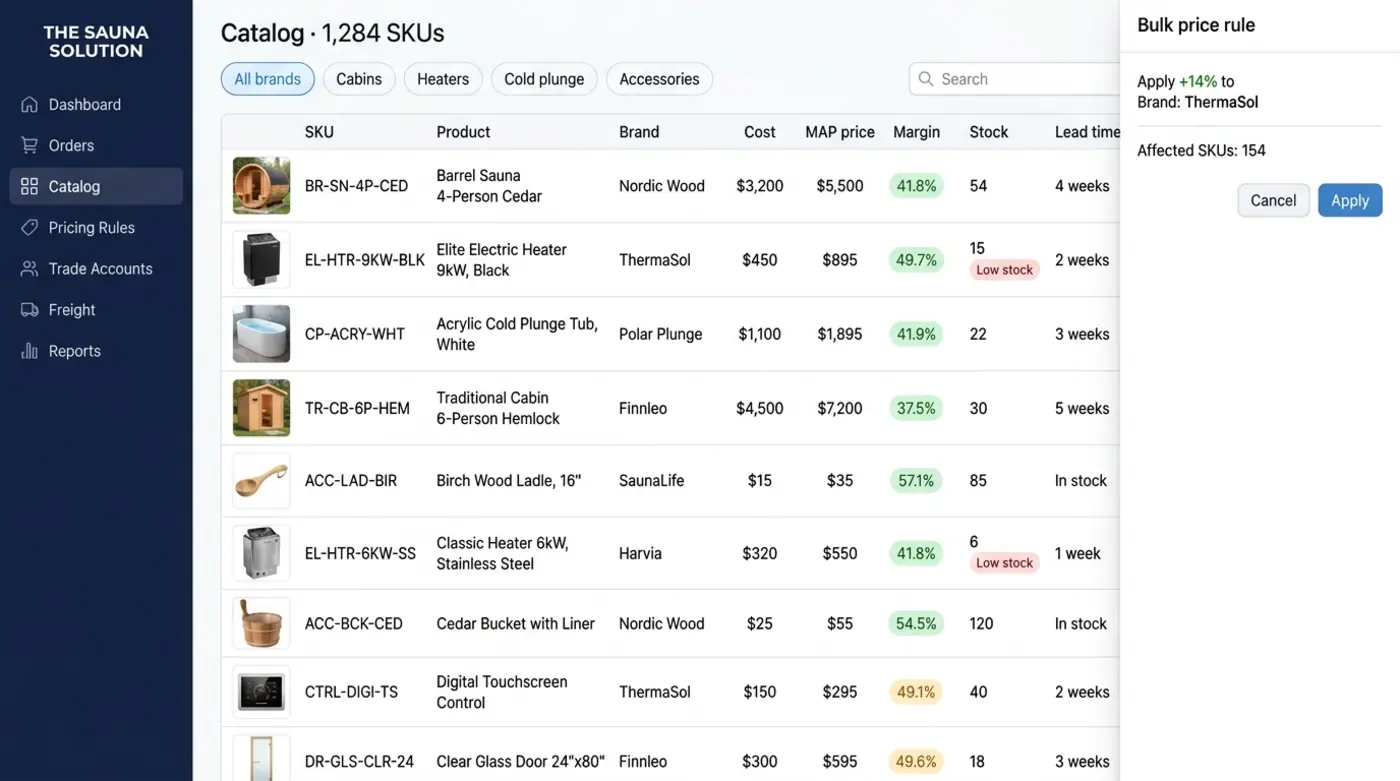
Behind it, a merchandising layer that does the arithmetic nobody has time for: bulk price rules by brand or category, margin floors, MAP compliance, low-stock and lead-time flags. Pricing stops being a monthly fire drill and becomes a setting.
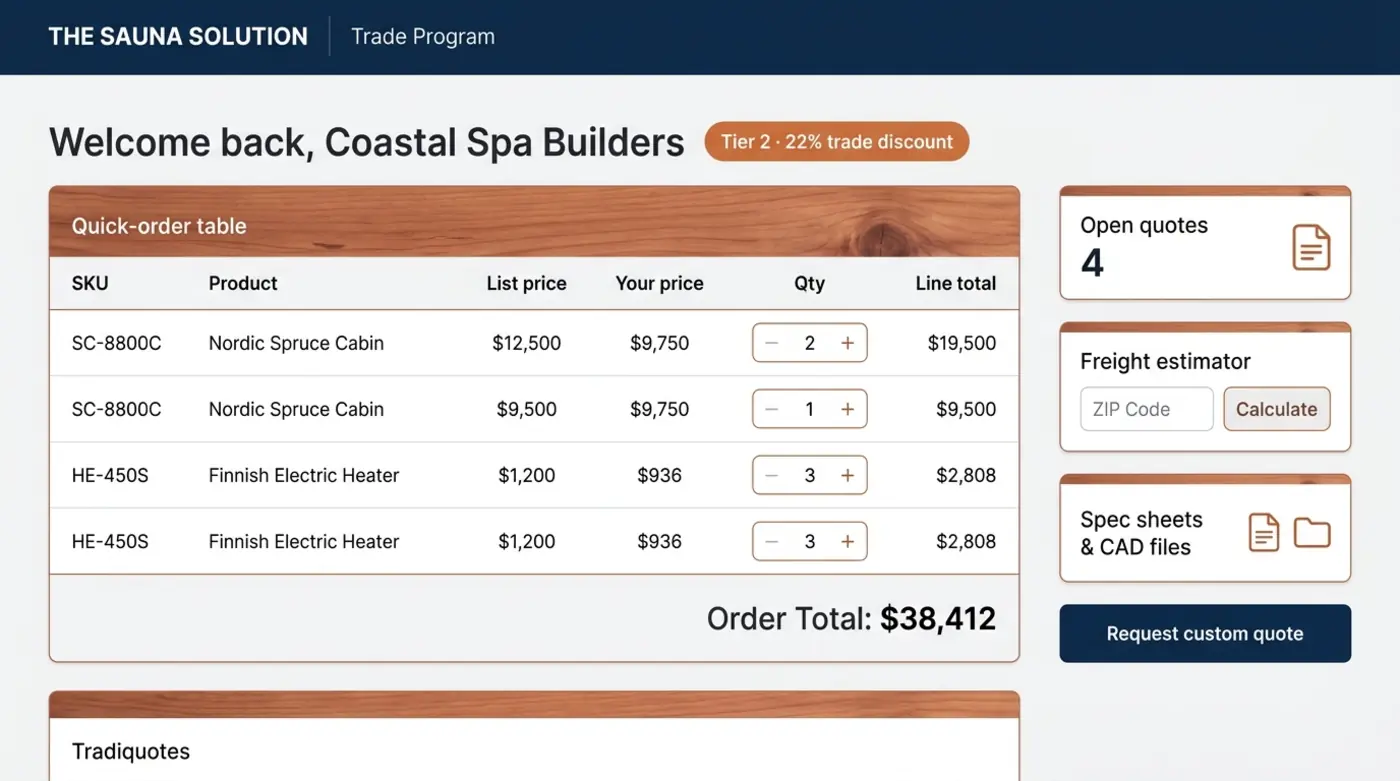
Then the part most retailers in this category leave on the table entirely — the trade channel. Builders, spa dealers and contractors buy in volume, repeat, and don't need convincing. They need tiered pricing, quotes, spec sheets and freight to a job site. A self-serve portal turns that into repeat wholesale revenue without hiring a single salesperson.
Nothing here is exotic. It's the discipline of answering the buyer's next question at the moment they ask it — and building the back office so the answer stays true as costs, stock and MAP rules move underneath you.
A residential cleaning marketplace: homeowners on one side, background-checked cleaning pros on the other, and a promise that sits between them — book online in 60 sec, pay when you're happy, every clean guaranteed.
A services marketplace has a harder job than a store. A store has to take money. A marketplace has to take money, then reliably produce a human at a stranger's front door at 9:00 AM — and be trusted enough that the stranger books again.
Do that on spreadsheets and a group chat and the failure modes are brutally predictable: double-booked crews, a no-show nobody logged, a customer who has to phone in to reschedule, a pro who doesn't know what they earned this week, and a dispute that comes down to one person's word against another's.
Every one of those is a refund, a one-star review, or a customer who quietly never rebooks — and none of them are visible in a marketing dashboard.
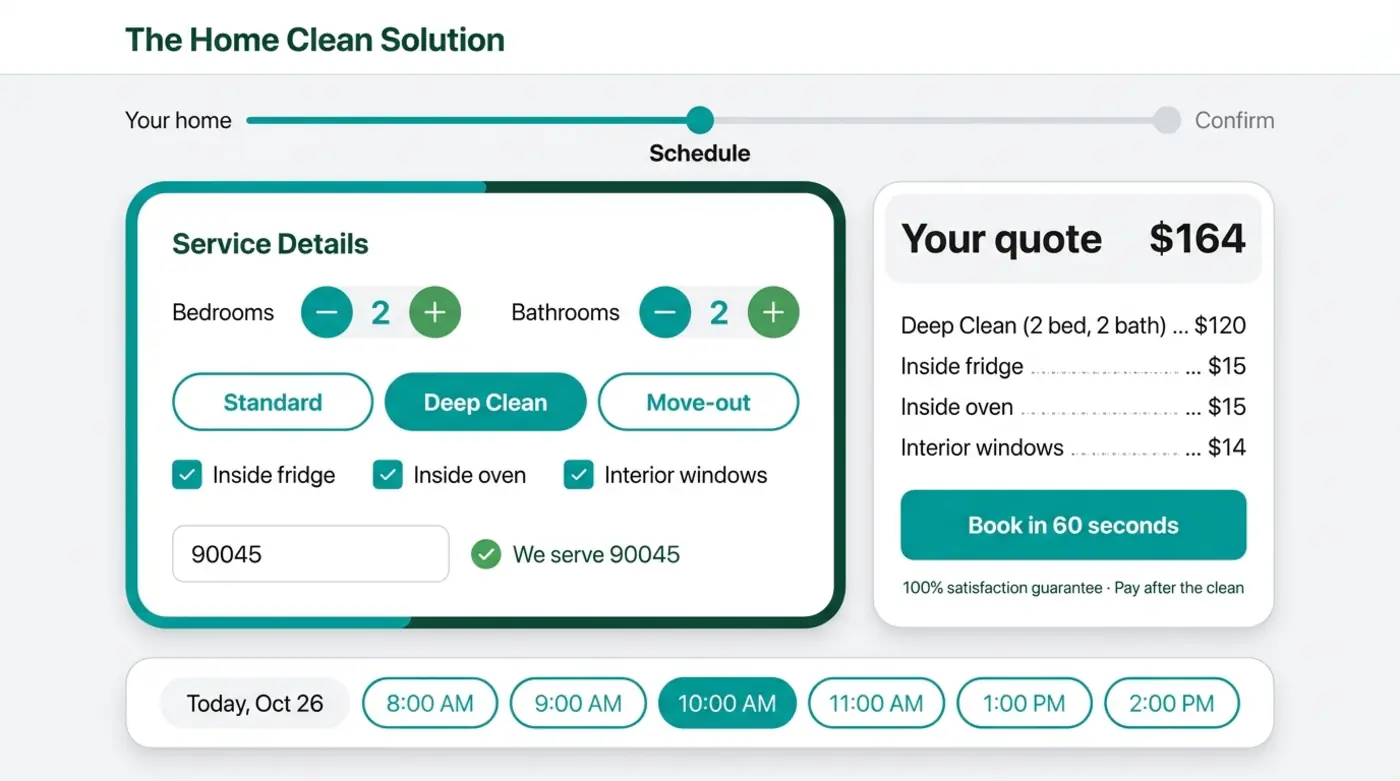
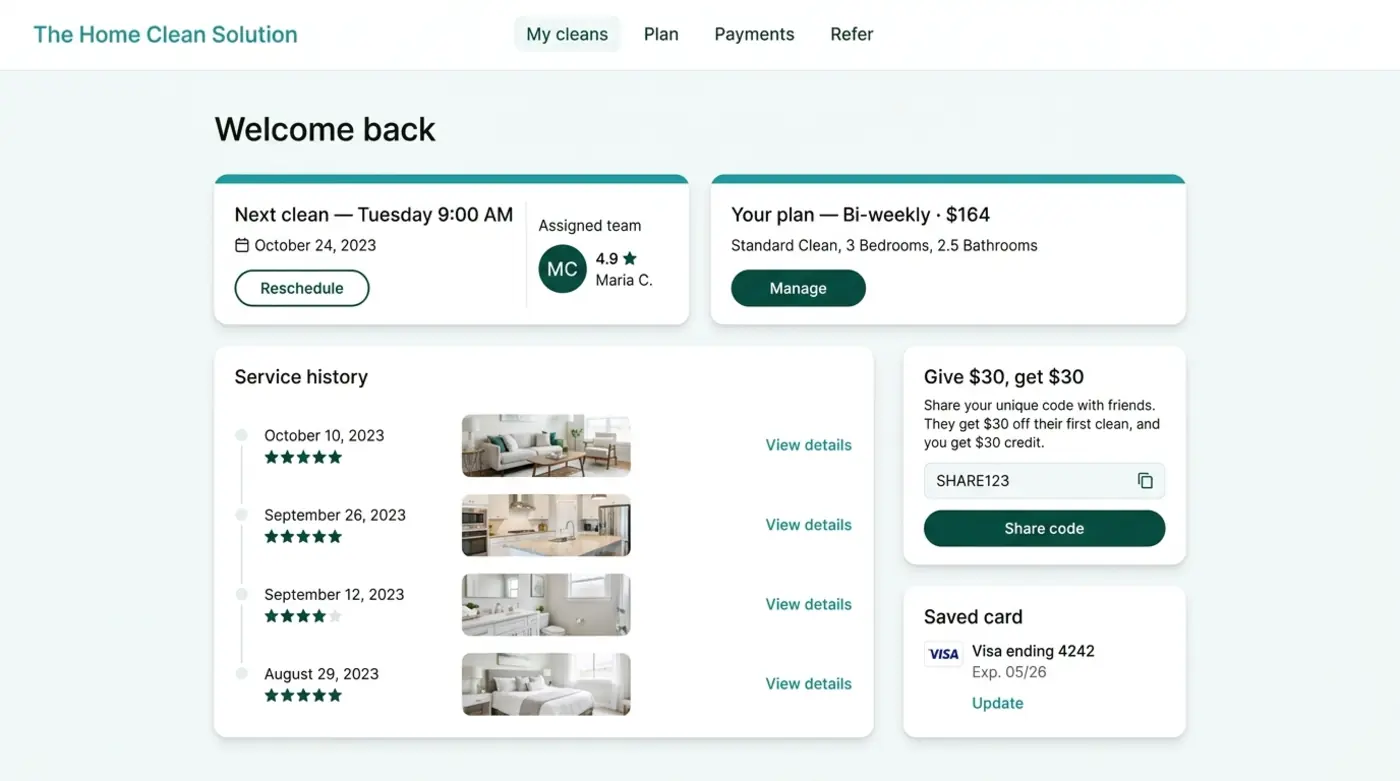
One system, four audiences, each seeing only what they need — and the same underlying data, so nobody reconciles anything by hand.
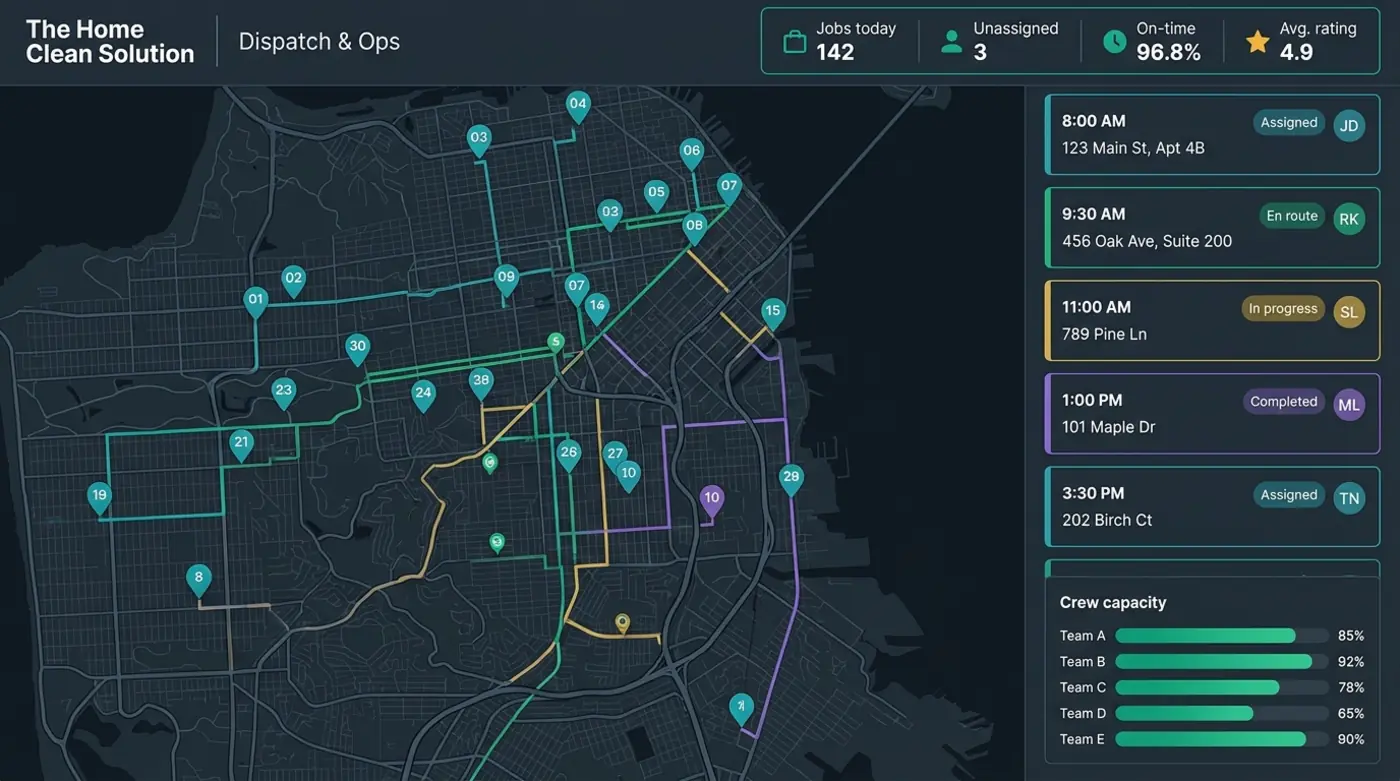
The dispatch console is where the marketplace stops being a directory and becomes a service. A booking lands, the system matches the right pro on skill, zone, rating and remaining capacity, routes the day, and pushes status to the customer — assigned, en route, in progress, complete. Nobody has to be the air-traffic controller.
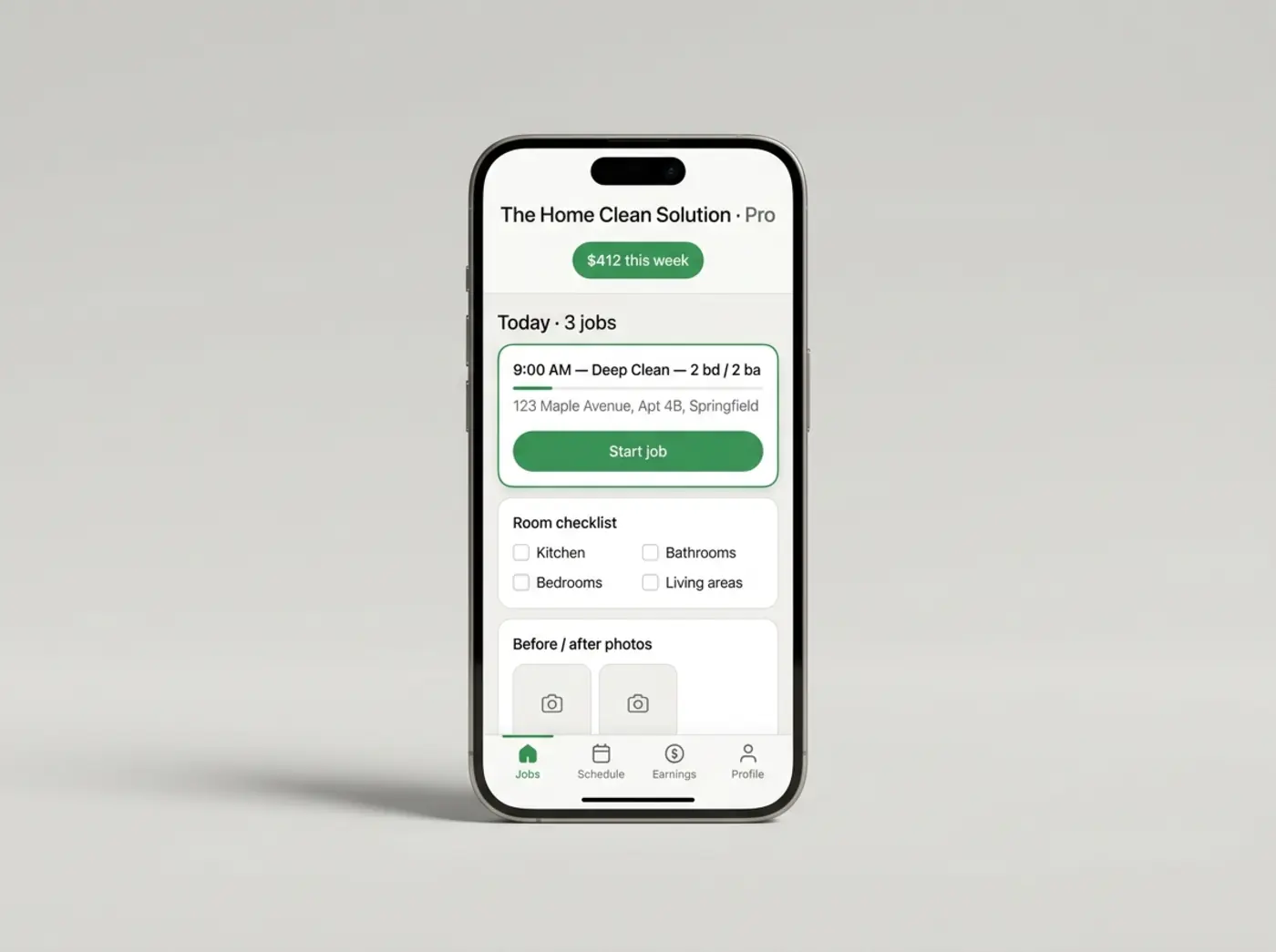
Supply-side retention is the quiet killer in marketplaces. Pros leave over two things: unclear pay and chaotic scheduling. So the app makes both boring — the day is laid out, the checklist is explicit, the photos close the job, and the earnings number is always current.
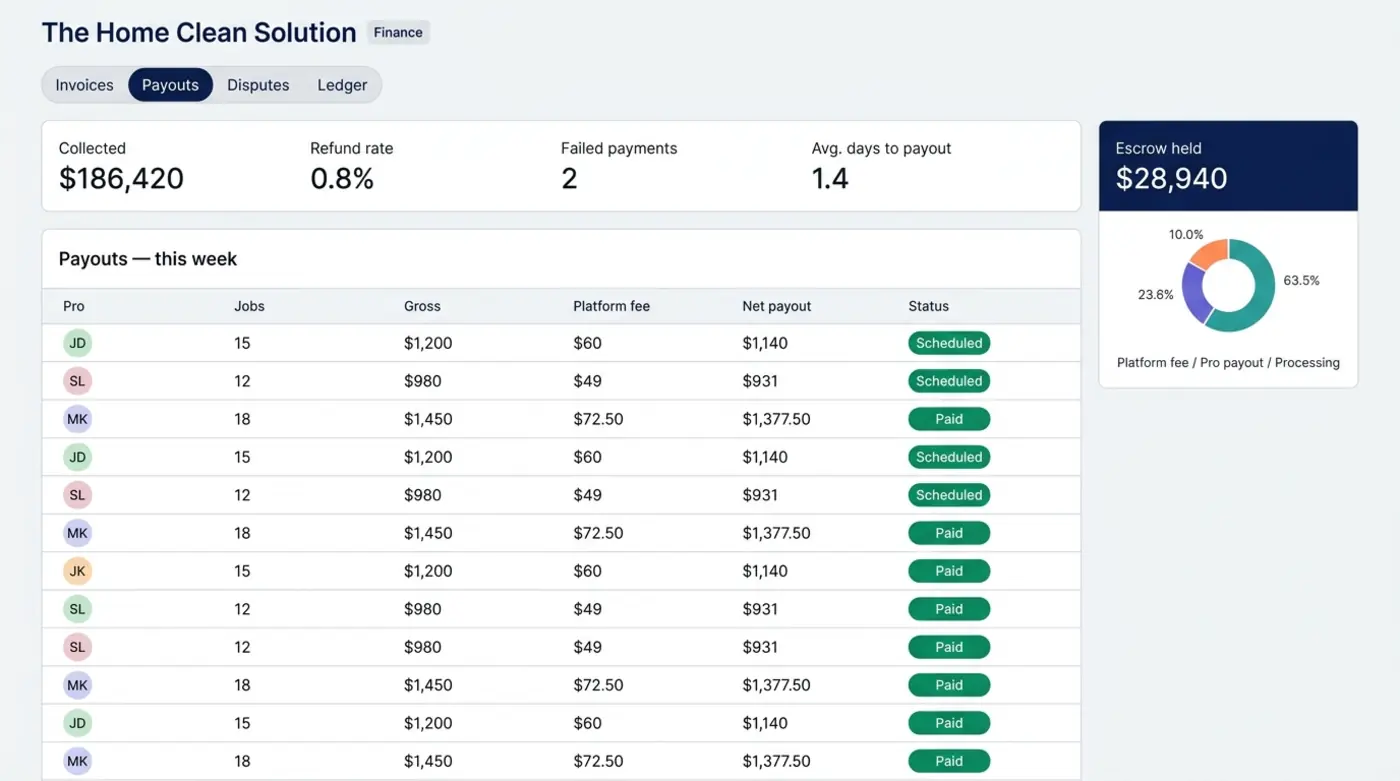
Most marketplace builds bolt the money on last and bleed for years afterwards — reconciling payouts in spreadsheets, arguing about fees, unable to answer "how much did we actually make in March?" We build it in from the first sprint, because it's the one part that can't be retrofitted cheaply.
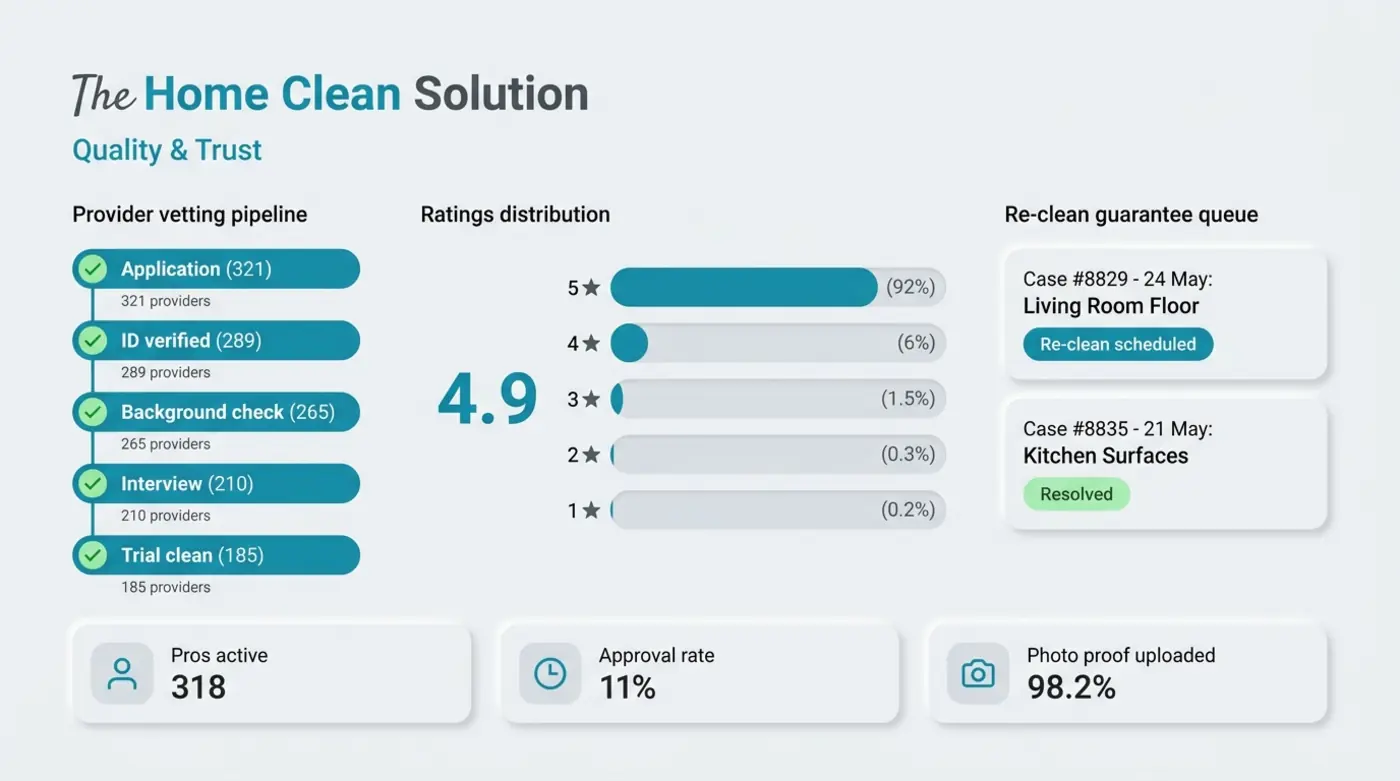
And because one bad provider costs more than ten good ones earn, quality is a pipeline rather than a policy: multi-stage screening with an auditable trail, ratings distribution watched for drift, and a guarantee queue so "we'll make it right" has a workflow behind it instead of a hope.
That's the whole economic argument. In recurring services, the second, fifth and twentieth booking are where the margin lives — and they're won by reliability, not by advertising.
An estimating and insurance-supplement platform for US auto-repair professionals — collision shops, mechanical shops, mobile techs and fleets. From the first damage photo to the approved estimate to the paid invoice, in one system.
A repair shop's estimate is its sales document — and in most shops it's a spreadsheet, a carbon pad or a $300-a-month legacy tool built for insurers, not for the shop. Writing one takes too long, getting the customer to approve it takes days of phone tag, and the supplement — the extra damage found once the panel comes off — is where shops quietly leave thousands on the table because documenting it is a chore.
Every un-approved estimate is a car sitting on the lift, earning nothing. Every undocumented supplement is work the shop did for free.

A multi-tenant SaaS where each shop gets its own workspace, its own labor rates and its own team — and the estimate becomes something a customer can approve from their phone in the parking lot.
Same playbook, third industry: find the step where the customer stalls — here, the approval — and collapse it to one tap. Then make the money story honest: photos behind every line, comparison against the insurer, and an invoice that reconciles with what was actually approved.
It doesn't matter whether you sell cabins, cleanings or collision repairs. The sequence is the same.
Every question a buyer has to phone about is a question you can lose them to. Configure, estimate, finance, reassure — inline.
If a human has to route it, chase it or retype it, it will fail at volume. Automate assignment, status and proof.
Collection, escrow, fees, payouts and a real ledger. Retrofitting this is the most expensive mistake in the category.
Attribute to the deposit, not the click. Then fund what survived the bank statement.
“The product page used to raise more questions than it answered. Now the page does the selling and we only pick up the phone for the buyers who genuinely want a human.”
“We ran the schedule out of a group chat. Now jobs assign themselves, the crew app closes them with photos, and I only look at exceptions.”
Marked (sample) because they're representative, not attributed. We don't publish a quote until the client has approved it by name.
Get a build quote and we'll name the riskiest part of your build — and what it takes to ship it — before you hire us. We hand-build every engagement, so we start 3 new clients in September.
 TopDevX